The Thousand and One Nights, Vol. I.: Commonly Called the Arabian Nights' Entertainments

Free to read — public domain
About this book

12 illustration(s) from this book
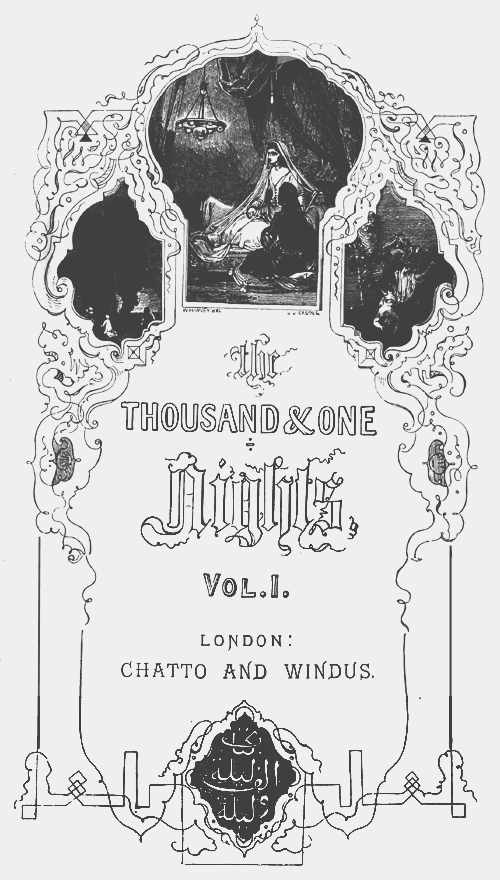
Ornamental Title.--At the foot is the Title in Arabic
printer's mark
printer's mark
illustration
Illustration 3
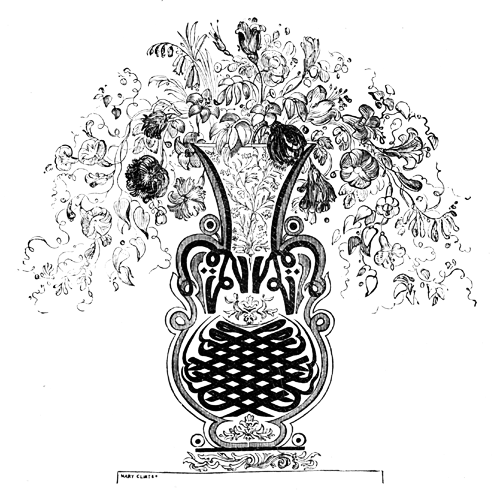
Head-piece to Preface.--The Vase is formed of the Arabic words signifying 'In the name of God, the Compassionate, the Merciful' (always placed at the head of a Muslim work), written doubly, and contrarily
Tail-piece to Preface
Head-piece to Table of Contents
Tail-piece to Table of Contents
Head-piece to List of Illustrations
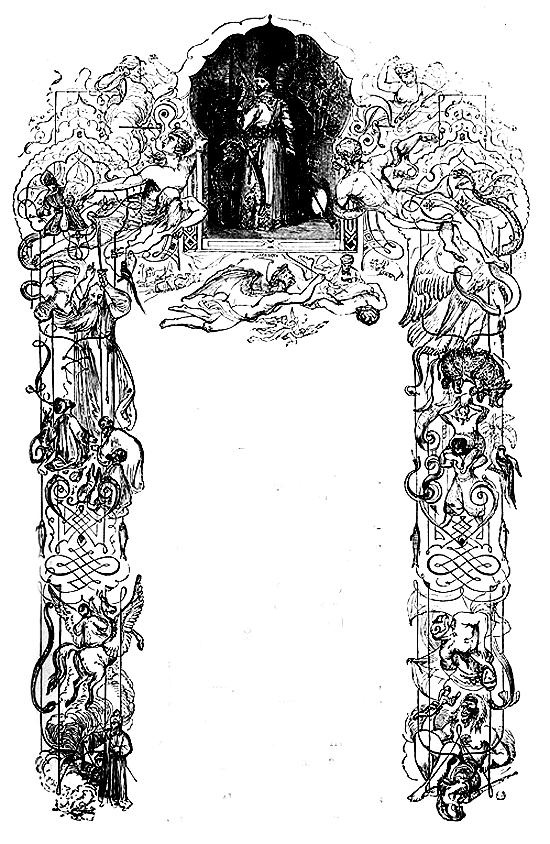
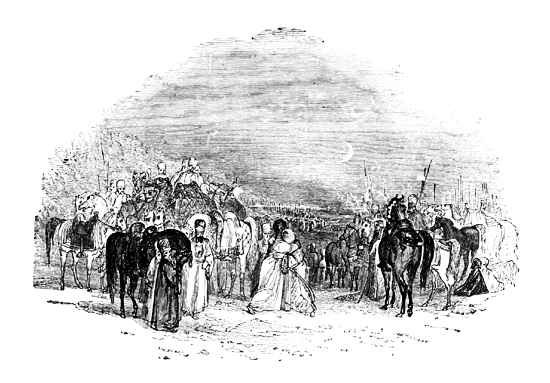
Shahriyár going out to hunt, and Ornamental Border
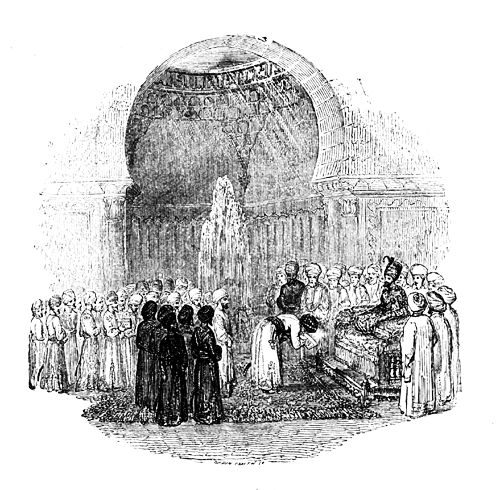
The Wezeer presenting the letter to Sháh-Zemán
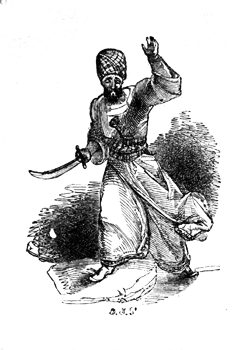
Sháh-Zemán, after having killed his Wife
Meeting of Shahriyár and Sháh-Zemán
Here terminating this long note, I must beg the reader to remark, that the superstitious fancies which it describes are prevalent among all classes of the Arabs, and the Muslims in general, learned as well as vulgar. I have comprised in it much matter not necessary to illustrate the introductory portion of this work, in order to avoid frequent recurrence to the same subject. Another apology for its length may also be offered:--its importance as confuting Schlegel's opinion, that the frequent mention of Genii is more consistent with Indian than with Arab notions. NOTE 22. This chest is described in some copies as formed of glass. NOTE 23. The term "'Efreet" has been explained above, in Note 21. NOTE 24. Most of the copies of the original, it appears, make the number of rings ninety-eight; therefore, I have substituted this, as less extraordinary, for five hundred and seventy, which is the number mentioned in the Cairo edition. NOTE 25. Almost every Muslim who can afford it has a seal-ring, for a reason shewn in a former note (No. 11).[102] NOTE 26. For the story of Yoosuf and Zeleekha (or Joseph and the wife of Potiphar), see the Ḳur-án, ch. xii.
PreviousPage 101 of 573
Next