The Thousand and One Nights, Vol. I.: Commonly Called the Arabian Nights' Entertainments

Free to read — public domain
About this book

12 illustration(s) from this book
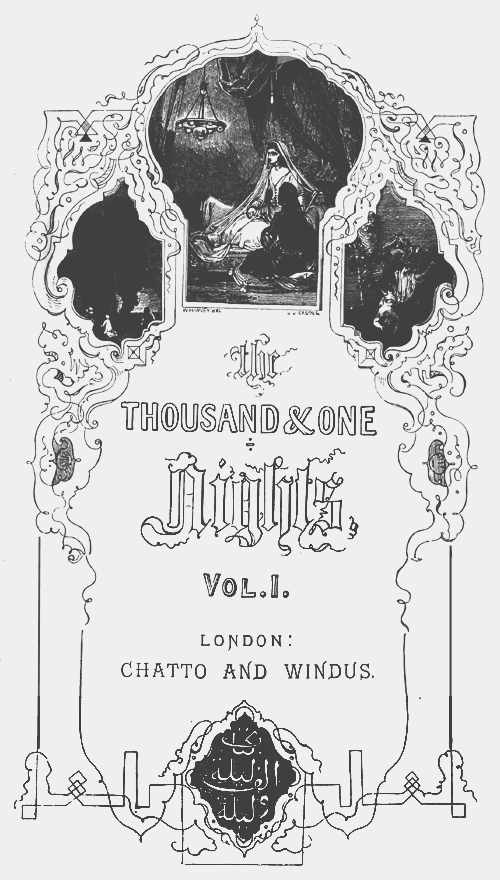
Ornamental Title.--At the foot is the Title in Arabic
printer's mark
printer's mark
illustration
Illustration 3
Head-piece to Preface.--The Vase is formed of the Arabic words signifying 'In the name of God, the Compassionate, the Merciful' (always placed at the head of a Muslim work), written doubly, and contrarily
Tail-piece to Preface
Head-piece to Table of Contents
Tail-piece to Table of Contents
Head-piece to List of Illustrations
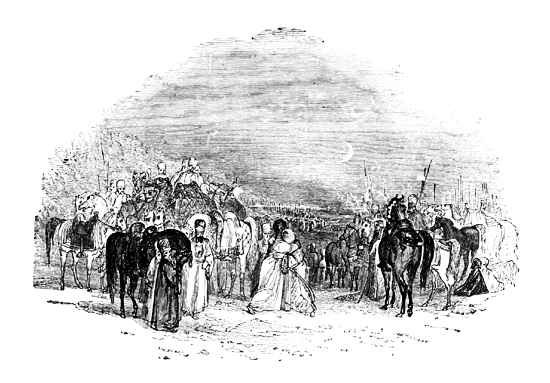
Shahriyár going out to hunt, and Ornamental Border
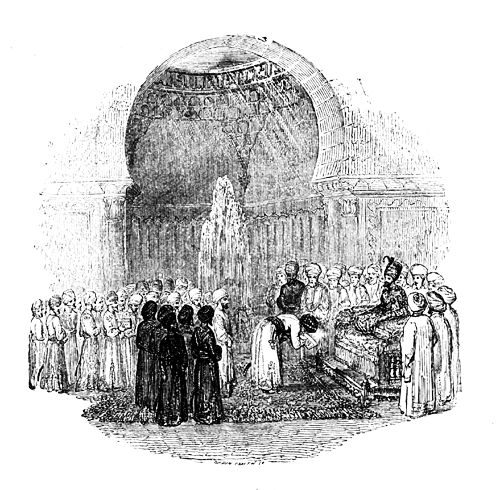
The Wezeer presenting the letter to Sháh-Zemán
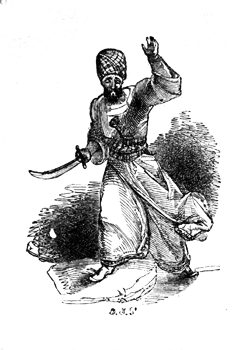
Sháh-Zemán, after having killed his Wife
Meeting of Shahriyár and Sháh-Zemán
[1] Two other printed editions were also used by Mr. Lane--that of the first two hundred Nights, printed at Calcutta, and in consequence of the loss, by shipwreck, of nearly the whole impression of the first volume, never completed; and that of Breslau. The former differs much, in matter and manner, from any other known copy; the latter, which was edited to the close of the seven hundred and third night by Professor Habicht, and completed by Professor Fleischer, is far inferior to all the others. One other edition has appeared in the Arabic, that of Calcutta, or "the Calcutta edition of the complete work." It was brought from Cairo, and is apparently (though not immediately) from the same original as the Booláḳ edition. I have continually referred to it for various readings, without finding any one of importance. And here I must animadvert on the practice of German orientalists of wasting their own time and their readers' patience in collecting such various readings of a work like "The Thousand and One Nights" as must necessarily be the result of the carelessness or the ignorance of copyists and reciters. The habit is unfortunately adopted by some Englishmen, who seem to imagine that all that is German is therefore learned.--ED.
PreviousPage 22 of 573
Next