12 illustration(s) from this book

2. Alms-giving. An alms, called "zekáh," commonly pronounced "zekah," is
required by law to be given annually, to the poor, of camels, oxen
(bulls and cows), and buffaloes, sheep and goats, horses and mules and
asses, and gold and silver (whether in money or in vessels, ornaments,
&c.), provided the property be of a certain amount, as five camels,
thirty oxen, forty sheep, five horses, two hundred dirhems, or twenty
deenárs. The proportion is generally one-fortieth, which is to be paid
in kind, or in money, or other equivalent.
3. Fasting (eṣ-ṣiyám). The Muslim must abstain from eating and drinking,
and from every indulgence of the senses, every day during the month of
Ramaḍán, from the first appearance of daybreak until sunset, unless
physically incapacitated.--On the first day of the following month, a
festival, called the Minor Festival, is observed with public prayer, and
with general rejoicing, which continues three days.
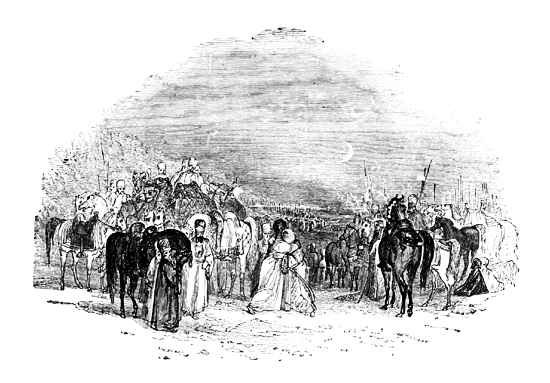
4. Pilgrimage (el-ḥajj). It is incumbent on the Muslim, if able, to
perform, at least once in his life, the pilgrimage to Mekkeh and Mount
'Arafát. The principal ceremonies of the pilgrimage are completed on the
9th of the month of Zu-l-Ḥejjeh: on the following day, which is the
first of the Great Festival, on the return from 'Arafát to Mekkeh, the
pilgrims who are able to do so perform a sacrifice, and every other
Muslim who can is required to do the same: part of the meat of the
victim he should eat, and the rest he should give to the poor. This
festival is observed otherwise in a similar manner to the minor one,
above mentioned; and lasts three or four days.