12 illustration(s) from this book


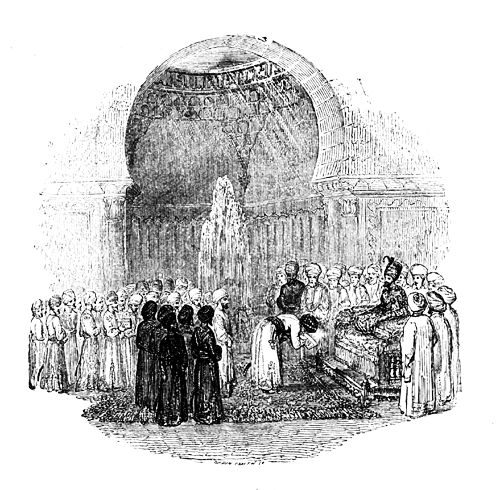
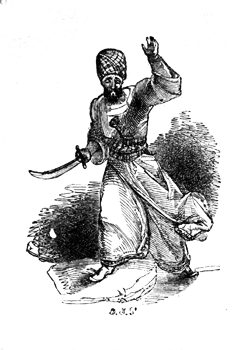
NOTE 14.--_On different modes of Obeisance._ Various different modes of
obeisance are practised by the Muslims. Among these, the following are
the more common or more remarkable: they differ in the degree of respect
that they indicate, nearly in the order in which I shall mention them;
the last being the most respectful:--1. Placing the right hand upon the
breast.--2. Touching the lips and the forehead or turban (or the
forehead or turban only) with the right hand.--3. Doing the same, but
slightly inclining the head during that action.--4. The same as the
preceding, but inclining the body also.--5. As above, but previously
touching the ground with the right hand.--6. Kissing the hand of the
person to whom the obeisance is paid.--7. Kissing his sleeve.--8.
Kissing the skirt of his clothing.--9. Kissing his feet.--10. Kissing
the carpet or ground before him.--The first five modes are often
accompanied by the salutation of "Peace be on you!" to which the reply
is, "On you be peace, and the mercy of God, and his blessings!" The
sixth mode is observed by servants or pupils to masters, by the wife to
the husband, and by children to their father, and sometimes to the
mother. It is also an act of homage paid to the aged by the young; or to
learned or religious men by the less instructed or less devout. The last
mode is seldom observed but to kings; and in Arabian countries it is now
very uncommon.
NOTE 15. It might seem unnecessary to say, that a King understood what
he read, were it not explained that the style of Arabic epistolary
compositions, like that of the literature in general, differs
considerably from that of common conversation.
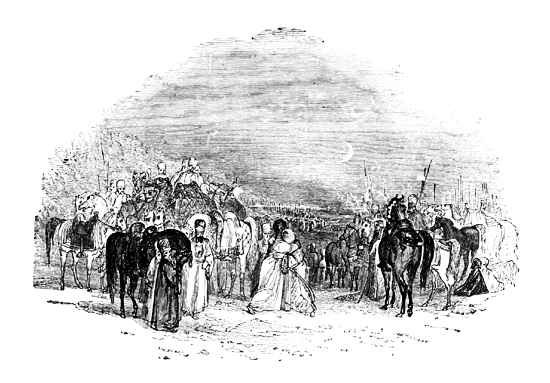
NOTE 16. The party travelled chiefly by night, on account of the heat of
the day.