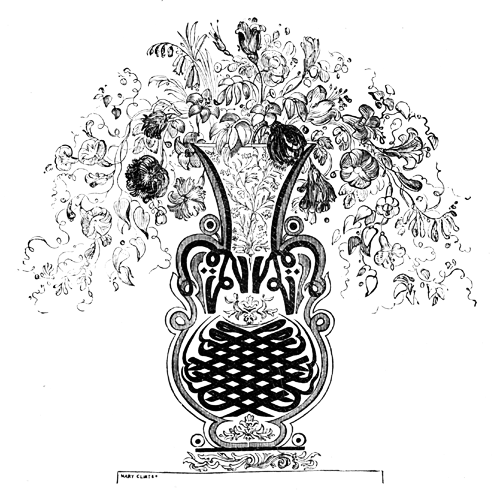
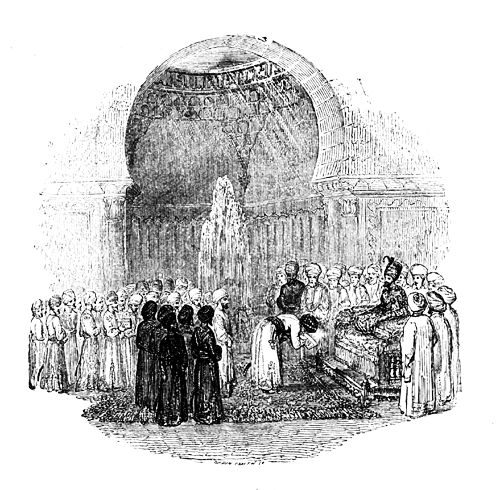
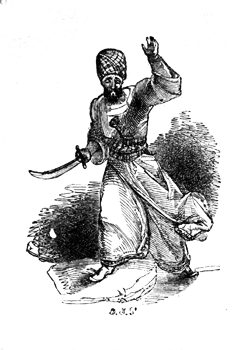
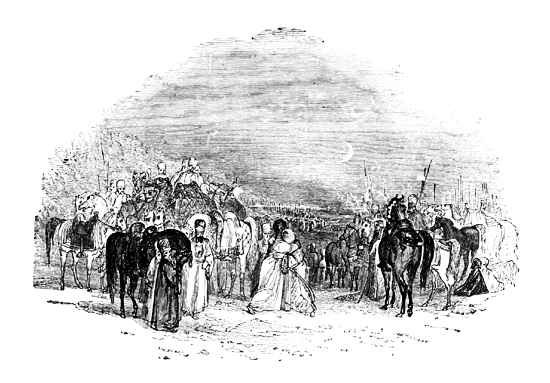
Ornamental Title.--At the foot is the Title in Arabicprinter's markIllustration 3Head-piece to Preface.--The Vase is formed of the Arabic words signifying 'In the name of God, the Compassionate, the Merciful' (always placed at the head of a Muslim work), written doubly, and contrarilyTail-piece to PrefaceHead-piece to Table of ContentsTail-piece to Table of ContentsHead-piece to List of IllustrationsShahriyár going out to hunt, and Ornamental BorderThe Wezeer presenting the letter to Sháh-ZemánSháh-Zemán, after having killed his WifeMeeting of Shahriyár and Sháh-Zemán
The proper and chief duties of a Wezeer are explained by the above, and
by a saying of the Prophet:--"Whosoever is in authority over Muslims, if
God would prosper him, He giveth him a virtuous Wezeer, who, when he
forgetteth his duty, remindeth him, and when he remembereth, assisteth
him: but if He would do otherwise, He giveth him an evil Wezeer, who,
when he forgetteth, doth not remind him, and when he remembereth, doth
not assist him."[41]