The Thousand and One Nights, Vol. I.: Commonly Called the Arabian Nights' Entertainments

Free to read — public domain
About this book

12 illustration(s) from this book
Ornamental Title.--At the foot is the Title in Arabic
printer's mark
printer's mark
illustration
Illustration 3
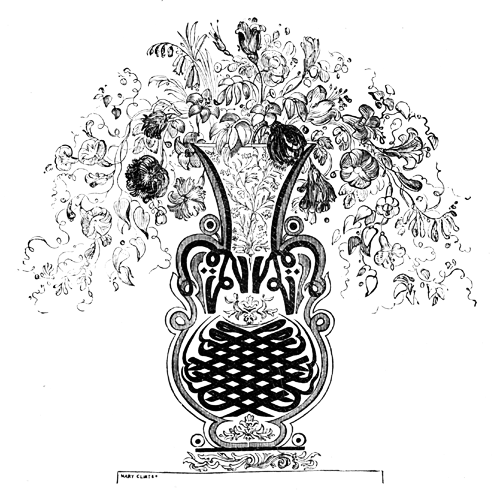
Head-piece to Preface.--The Vase is formed of the Arabic words signifying 'In the name of God, the Compassionate, the Merciful' (always placed at the head of a Muslim work), written doubly, and contrarily
Tail-piece to Preface
Head-piece to Table of Contents
Tail-piece to Table of Contents
Head-piece to List of Illustrations
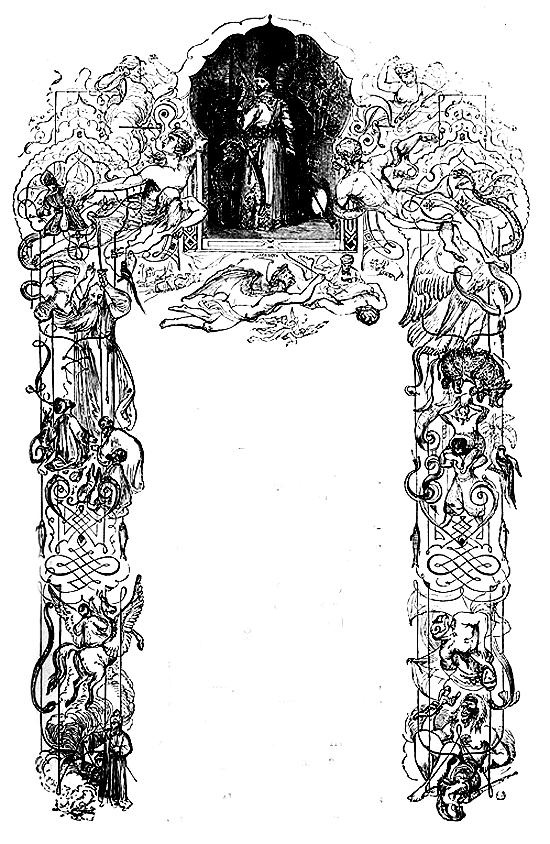
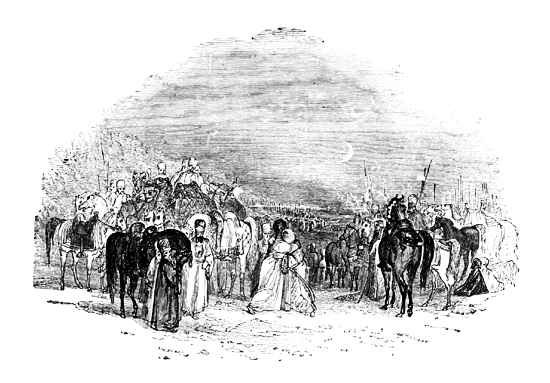
Shahriyár going out to hunt, and Ornamental Border
The Wezeer presenting the letter to Sháh-Zemán
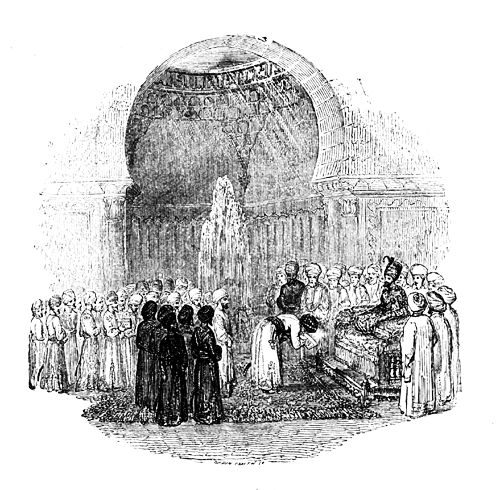
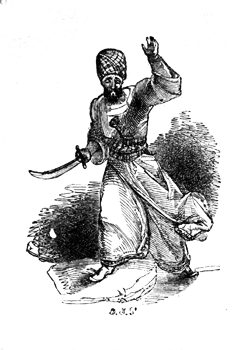
Sháh-Zemán, after having killed his Wife
Meeting of Shahriyár and Sháh-Zemán
"It is held," says El-Ḳazweenee, "that the Jinn are aerial animals, with transparent bodies, which can assume various forms. People differ in opinion respecting these beings: some consider the Jinn and Sheyṭáns as unruly men; but these persons are of the Moạtezileh [a sect of Muslim freethinkers]: and some hold, that God, whose name be exalted, created the Angels of the light of fire, and the Jinn of its flame [but this is at variance with the general opinion], and the Sheytáns of its smoke [which is also at variance with the common opinion]; and that [all] these kinds of beings are [usually] invisible[60] to men, but that they assume what forms they please, and when their form becomes condensed they are visible."--This last remark illustrates several descriptions of Jinnees in this work; where the form of the monster is at first undefined, or like an enormous pillar, and then gradually assumes a human shape and less gigantic size. The particular forms of brutes, reptiles, &c., in which the Jinn most frequently appear will be mentioned hereafter.
PreviousPage 87 of 573
Next