12 illustration(s) from this book


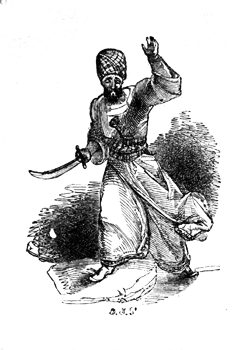
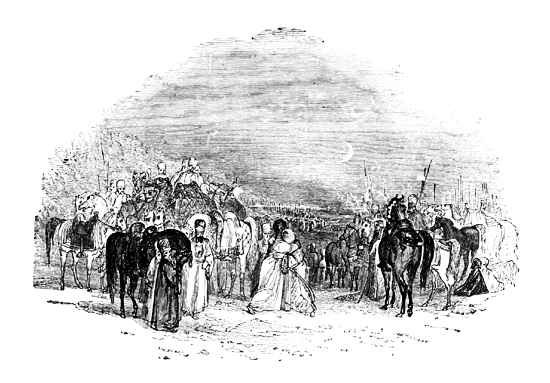
That particular Jinnees presided over particular places, was an opinion
of the early Arabs. It is said in the Ḳur-án, "And there were certain
men who sought refuge with certain of the Jinn."[82] In the Commentary
of the Jeláleyn, I find the following remark on these words:--"When they
halted, on their journey, in a place of fear, each man said, 'I seek
refuge with the lord of this place, from the mischief of his foolish
ones!'" In illustration of this, I may insert the following tradition,
translated from El-Ḳazweenee:--"It is related by a certain narrator of
traditions, that he descended into a valley, with his sheep, and a wolf
carried off a ewe from among them; and he arose, and raised his voice,
and cried, 'O inhabitant of the valley!' whereupon he heard a voice
saying, 'O wolf, restore to him his sheep!' and the wolf came with the
ewe, and left her, and departed."--The same opinion is held by the
modern Arabs, though probably they do not use such an invocation.--A
similar superstition, a relic of ancient Egyptian credulity, still
prevails among the people of Cairo. It is believed that each quarter of
this city has its peculiar guardian-genius, or Agathodæmon, which has
the form of a serpent.[83]
It has already been mentioned that some of the Jinn are Muslims; and
others, infidels. The good Jinn acquit themselves of the imperative
duties of religion; namely, prayers, alms-giving, fasting during the
month of Ramaḍán, and pilgrimage to Mekkeh and Mount 'Arafát: but in the
performance of these duties they are generally invisible to human
beings. Some examples of the mode in which good Jinn pay the alms
required of them by the law, I have given in a former work.[84]
Of the services and injuries done by Jinn to men, some account must be
given.