The Thousand and One Nights, Vol. I.: Commonly Called the Arabian Nights' Entertainments

Free to read — public domain
About this book

12 illustration(s) from this book
Ornamental Title.--At the foot is the Title in Arabic
printer's mark
printer's mark
illustration
Illustration 3
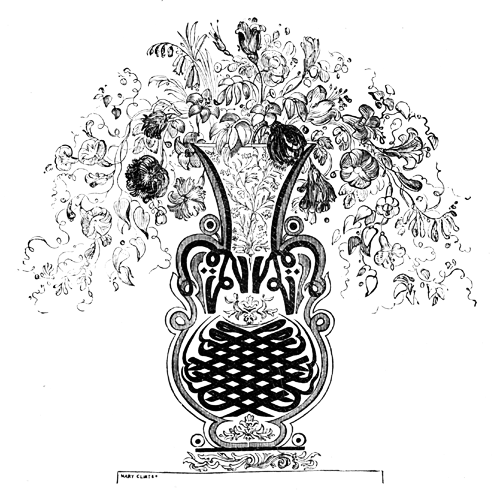
Head-piece to Preface.--The Vase is formed of the Arabic words signifying 'In the name of God, the Compassionate, the Merciful' (always placed at the head of a Muslim work), written doubly, and contrarily
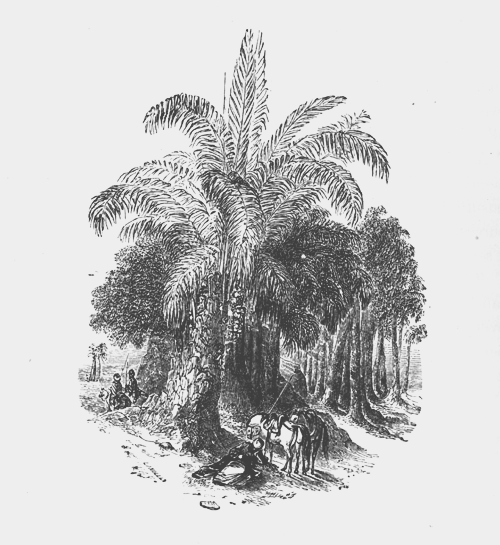
Tail-piece to Preface
Head-piece to Table of Contents
Tail-piece to Table of Contents
Head-piece to List of Illustrations
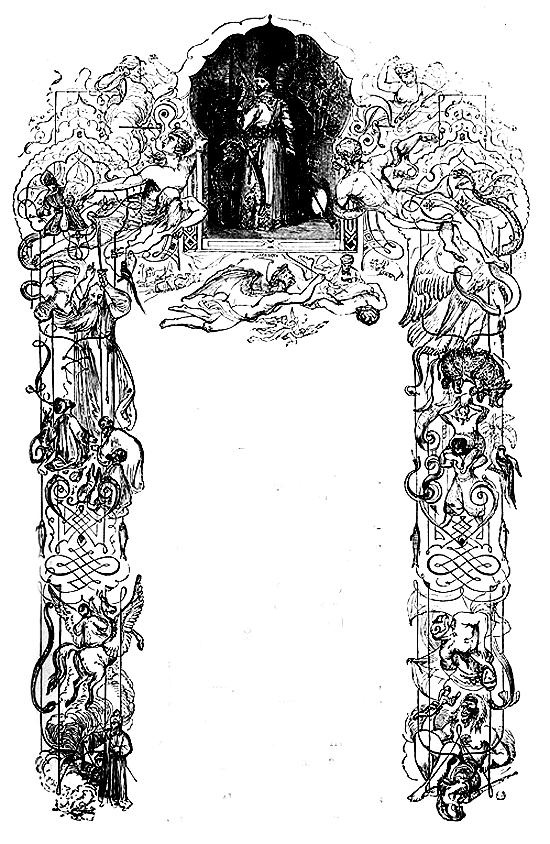
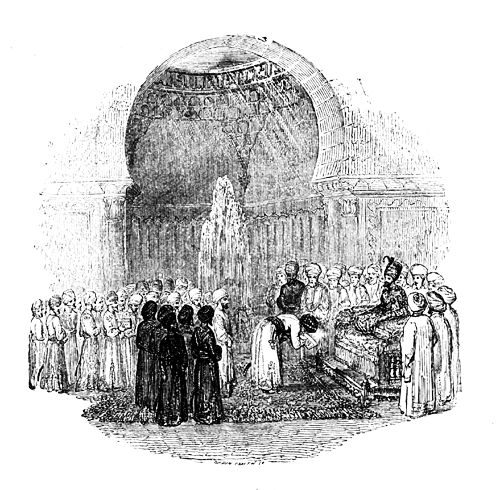
Shahriyár going out to hunt, and Ornamental Border
The Wezeer presenting the letter to Sháh-Zemán
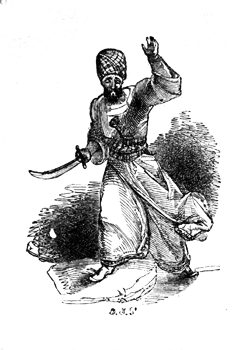
Sháh-Zemán, after having killed his Wife
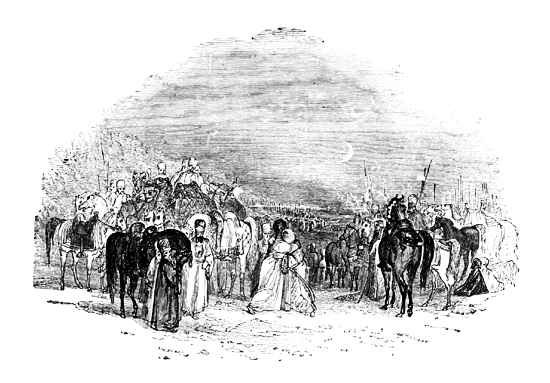
Meeting of Shahriyár and Sháh-Zemán
The Delhán is also a demoniacal being, inhabiting the islands of the seas, having the form of a man, and riding on an ostrich. It eats the flesh of men whom the sea casts on the shore from wrecks. Some say that a Delhán once attacked a ship in the sea, and desired to take the crew; but they contended with it; whereupon it uttered a cry which caused them to fall upon their faces, and it took them.[97]--In my MS. of Ibn-El-Wardee, I find the name written "Dahlán." He mentions an island called by this name, in the Sea of 'Omán; and describes its inhabitants as cannibal Sheyṭáns, like men in form, and riding on birds resembling ostriches. The Shiḳḳ is another demoniacal creature, having the form of half a human being (like a man divided longitudinally); and it is believed that the Nesnás is the offspring of a Shiḳḳ and of a human being. The Shiḳḳ appears to travellers; and it was a demon of this kind who killed, and was killed by, 'Alḳamah, the son of Ṣafwán, the son of Umeiyeh; of whom it is well known that he was killed by a Jinnee. So says El-Ḳazweenee.
PreviousPage 99 of 573
Next